


EA College Football Mobile 27
4.2303.00 Reviews
App Specs
- Version
- 1.2.0
- Updated On
- License
- Free
- Downloads
- 10,000+
- Developer
- ELECTRONIC ARTS
- Categories
- Sports
- Platform
- Android
Screenshots
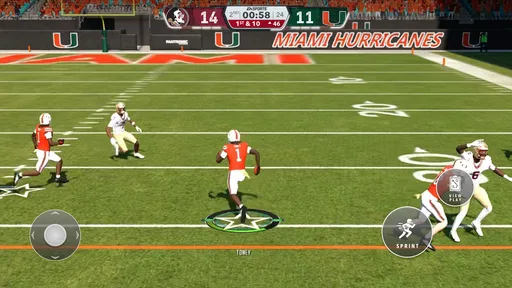

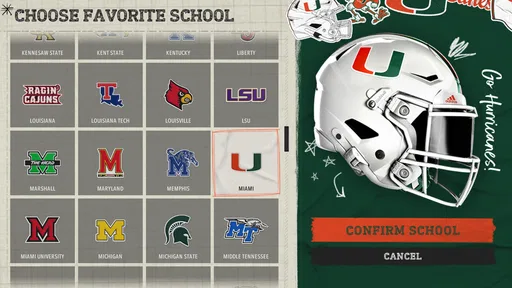
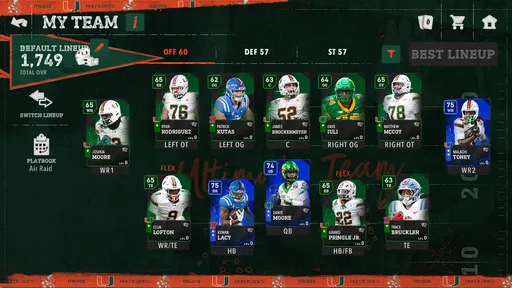


 Analysis by AppCompare
I approached EA College Football Mobile 27 as a sports game first, but its real test is how comfortably different people can understand, control, and enjoy it. Developed by ELECTRONIC ARTS, it puts you in the role of manager and coach, asking you to build a dream team and compete against rivals in a playoff-focused experience. That setup makes it more thoughtful than a simple quick-match title, because your decisions matter before the action begins.
It is free to download and aimed at Everyone, with optional in-app purchases ranging from $0.99 to $99.99 per item. The game currently sits at a 4.4 average from around 758 ratings, alongside roughly 288 written reviews and over 10K installs. Those figures suggest a modest but interested player base rather than a huge, established mobile community. After spending time with it, I see the appeal: it is convenient for short sessions, but it also asks for enough attention that the best experience comes when you are not trying to play while distracted.
How clearly the game communicates what is happening
I focus here on how the game makes its coaching-and-management premise understandable, since clear communication can make the difference between a satisfying decision and a confusing menu. I also consider a practical habit for keeping each session manageable. That leads naturally to how the same structure works when you have only a short break to play.
Readability and navigation
The manager-and-coach format gives the game a useful structure. Instead of dropping me into an unexplained match every time, the central idea is easy to understand: shape a team, make decisions, and try to overcome the next rival. That clarity matters for players who prefer to understand the purpose of each screen before committing to an action. I found the overall concept easier to grasp than sports games that mix several modes together without explaining which one should be the priority.
At the same time, a sports management game naturally involves more than one layer of information. Team choices, opponent decisions, playoff progress, and match actions all compete for attention. For a new player, the challenge is not necessarily the football theme itself; it is learning which choices have immediate consequences and which are part of the longer route through the competition. I recommend taking the first sessions slowly rather than tapping through menus just to reach a match.
That approach also helps players who need extra time to read. A fast, impatient rhythm can make any strategy game feel confusing, especially when several decisions appear close together. I would treat the opening sessions as orientation time: read each prompt, notice what changes after a decision, and build a personal routine for checking the team before facing a rival. This is more reliable than trying to remember every option at once.
The most useful accessibility habit is to reduce information overload before it becomes frustration. I do that by focusing on one question at a time: what is my current objective, what decision is available now, and what result am I trying to create? That simple method makes the coaching role feel manageable and is particularly helpful for players who find dense game screens tiring.
Worth Reading Before You Choose

Flipboard Shows What News Apps Must Do Beyond the Feed

Switching to Android Auto Means Rethinking Your Driving Routine

Google Calendar Makes a Crowded Week Easier to Manage

Ludo King Makes the Most of the Minutes Between Plans

Baby Panda World Brings Quick Play to Modern Phones, but Its Game Library Feels Busy

ESPN’s Live Game View Makes Following Close Games Easier
The game’s short store description presents it as EA College Football, but the fuller experience is better understood as a compact coaching-and-competition game. That distinction is important when choosing it. Someone looking only for direct, continuous on-field control may find the management emphasis less satisfying, while someone who enjoys planning can appreciate the breathing room between contests.
Motor and sensory considerations
From a motor perspective, the strongest part of this format is that it does not demand the same kind of constant physical response as a traditional action sports game. A player who dislikes rapid combinations, sustained thumb movement, or precise timing may feel more comfortable with a role centered on coaching decisions. The game still requires interaction and attention, but the appeal is not based solely on athletic reflexes.
That does not make it effortless for every player. Mobile controls can still become uncomfortable during longer sessions, and repeated tapping may be tiring for people with limited dexterity or hand pain. I would use shorter play periods, keep the phone supported rather than held in one hand, and pause between playoff steps when concentration starts to drop. Those are practical adjustments, not replacements for dedicated accessibility controls, but they can make the experience less physically demanding.
Players with tremors or reduced precision may want to test the basic interaction before investing in optional purchases. The reason is simple: the game’s free entry lets you judge whether the control rhythm suits you without first committing money. If ordinary taps or selections already feel difficult, paying for additional content will not solve that underlying problem.
For sensory comfort, the main consideration is attention. Sports games often use visual emphasis, movement, and match pressure to create excitement, but those same elements can become tiring for players sensitive to busy screens or rapid changes. I found it easier to stay oriented when I played in a quiet setting and avoided switching repeatedly between the game and other apps. That is especially relevant for anyone who processes visual information more slowly.
I would also avoid assuming that a game rated Everyone is automatically comfortable for every sensory profile. The age rating tells me who the product is broadly intended for, not whether every player will find its presentation relaxing or easy to follow. Parents and carers should let a child try a brief session and observe whether the coaching structure is understandable, rather than judging suitability from the rating alone.
Situational access in everyday use
This is where the game makes the most sense to me. I can imagine opening it during a commute, before an appointment, or during a short break when I want something more involving than a one-minute arcade game. The manager-and-coach setup suits players who like to make a few meaningful choices without needing a full television-style match every time.
A realistic example would be a student waiting for a ride after class. They could review the team, make a coaching decision, and complete part of the playoff journey without needing a long uninterrupted session. The same flexibility could work for an adult with an irregular schedule who wants a sports game that can be approached in pieces rather than requiring a fixed evening routine.
However, situational access depends on concentration. I would not choose this game while walking, crossing a street, or handling another task. Even if a particular moment seems simple, the value comes from paying attention to the decision and its consequence. Players who need to pause frequently should use it in a safe, stationary setting and treat interruptions as a reason to stop rather than rush.
It can also work well for shared viewing. One person can take the coaching role while another offers opinions about the dream team or the next rival. That makes the game more approachable for someone who is interested in college football but does not want to operate every part of a fast sports simulation. The shared format turns the strategic layer into a conversation rather than a solitary test of reaction speed.
For players with limited energy, I would divide the experience into small goals: organize the team, play one contest, then stop. This prevents the playoff structure from becoming an exhausting marathon. The same technique helps people who have difficulty maintaining focus, because each session has a clear beginning and end instead of an open-ended demand to keep playing.
Where it differs from familiar sports alternatives
Compared with a conventional football game built around direct control, this title is better suited to players who enjoy deciding what should happen rather than personally executing every movement. That can be a meaningful advantage for people who find action-heavy sports games inaccessible or stressful. It also gives the game a different kind of replay value: the interest comes from choices about the team and the path through the playoff competition, not just from mastering a control scheme.
On the other hand, players seeking a highly detailed simulation may prefer a larger console or mobile sports alternative with deeper tactical controls, more extensive presentation, or a stronger competitive ecosystem. I would not select this game simply because it carries an EA name. Its appeal depends on whether the manager-and-coach perspective matches what you want from football.
It is also distinct from casual sports games that offer instant matches with almost no planning. Those games are easier to understand in a few seconds and may be better for someone who wants a quick distraction. Here, the reward is greater when I engage with the team-building and rival-defeating loop, so the experience asks for more mental involvement than a basic pick-up-and-play title.
That trade-off is important for inclusive design. A slower strategic structure may remove barriers for players who struggle with rapid action, while introducing barriers for people who find menus, layered decisions, or long-term planning difficult. There is no single “accessible sports game” profile; the right choice depends on whether the player’s main challenge is physical speed, information density, sustained attention, or something else.
Remaining barriers and the cost of experimentation
The clearest practical limitation is the presence of optional purchases. The game is free, which makes initial testing straightforward, but items can cost from $0.99 to $99.99 each. That wide range means families should establish a spending rule before play, especially when a child can access the game. The free starting point is useful, but it should not be confused with a completely cost-free experience for players who want everything available.
I also think the game’s accessibility depends heavily on the player’s ability to self-manage. Someone who needs adjustable text size, simplified controls, audio alternatives, or highly specific sensory settings should investigate those needs directly before making it a main game. I cannot recommend it as a universal solution for those requirements. The strategic format may help, but the format alone does not guarantee that every individual barrier disappears.
Another issue is the difference between understanding the objective and understanding the best decision. The game can make the broad goal clear while still leaving a newer player uncertain about why one choice is preferable to another. I found that experimentation was part of the learning process. That is enjoyable for players who like discovering systems, but it may frustrate anyone who needs immediate, explicit guidance.
The rating of Everyone makes it broadly approachable, yet parents should still consider the child’s reading ability, patience, and understanding of optional spending. A young player who enjoys football may be attracted by the theme but lose interest if the coaching layer feels too abstract. Conversely, a child who likes organizing teams and making choices may find that same layer more engaging than direct match controls.
Version 1.2.0 is the current release, and that is worth noting when troubleshooting expectations. I would keep the game updated through the normal platform process, but I would not assume that a version number by itself indicates a particular accessibility improvement. What matters to me is whether the current interface feels readable and manageable on the device being used.
My inclusive verdict
I recommend EA College Football Mobile 27 to players who want a free sports game with a coaching identity, especially those who prefer planning over relentless action. Its playoff focus gives sessions a clear direction, and the manager role creates a useful alternative to the usual direct-control football experience. For many players, that can mean less dependence on rapid reflexes and more room to think.
I would be more cautious if your priority is deep simulation, instant matches, or highly customizable accessibility settings. The game is not the right choice for someone who wants every interaction to be effortless, or for anyone who is uncomfortable with optional purchases appearing in a free game. Those are not deal-breakers for me, but they should be part of the decision rather than discovered after a long investment.
My best advice is to begin with a short, no-spend trial. Check whether the text and decision flow are comfortable, whether the controls suit your hands, and whether the coaching perspective remains interesting after the novelty fades. If those three tests go well, the game can become a pleasant way to follow a playoff journey in manageable pieces.
Overall, I see it as an approachable but not universally accessible sports experience. Its strongest inclusive quality comes from shifting attention toward team management and coaching, which can reduce the pressure found in action-first alternatives. Its weakest point is that individual needs around readability, sensory comfort, motor precision, and spending still require personal judgment. For the right player, that balance works: I get a focused football game that fits short breaks while still giving my decisions some weight.
Pros
- Authentic college teams
- logos
- stadiums
- and traditions enhance immersion.
- Short matches make it easy to play during brief breaks.
- Team-building systems provide goals beyond individual games.
- Regular events can keep the experience feeling fresh.
- Touch controls are simple to learn for new players.
Cons
- Progress may feel slow without spending premium currency.
- Online competition can be affected by connection quality.
- Energy or stamina limits may interrupt longer play sessions.
- Some menus and upgrades can feel overwhelming at first.
- Device performance may vary during crowded stadium sequences.
FAQs for EA College Football Mobile 27
What is EA College Football Mobile 27?
EA College Football Mobile 27 is expected to be a mobile American football experience centered on college teams, recruiting, roster management, and competitive gameplay. Before downloading, check the official store listing carefully, because the final title, features, supported devices, and release details may vary by region. Avoid unofficial APK files or websites promising early access, as they may be unsafe or misleading.
Is EA College Football Mobile 27 officially available for Android and iOS?
Availability should be confirmed through Google Play or the Apple App Store rather than third-party download pages. Search for the official publisher, review the developer information, and compare the app icon and description with EA’s official announcements. If the game does not appear in your country, it may be unreleased, region-limited, or still in testing. Do not assume unofficial listings are legitimate.
Does EA College Football Mobile 27 require an internet connection?
A game built around live college football content, online competitions, events, account progression, and updated rosters will likely require a stable internet connection for most important features. Even if some menus or limited activities work offline, online access may be needed to save progress and synchronize your account. Players should also expect data usage, especially when downloading updates or participating in multiplayer modes.
Is EA College Football Mobile 27 free to download?
The mobile version may be free to install, but users should check the official store page for the exact pricing model before downloading. Free-to-play sports games commonly include optional in-app purchases for currency, packs, cosmetics, energy, or progression benefits. Review the purchase settings, parental controls, and refund policies on your device, particularly if children will be using the game or sharing the account.
What devices are compatible with EA College Football Mobile 27?
Compatibility depends on the final release requirements, operating-system version, available storage, and device performance. Newer phones and tablets with sufficient memory will generally provide a smoother experience than older entry-level hardware. Before installing, read the official Android or iOS requirements and make sure you have enough free space for the initial download and future updates. Performance can also vary by region and device model.


